Filed under:

Trick to Square Numbers Near the Multiples of 50

We are expanding upon the mental math trick of Hans Bethe that impressed Richard Feynman in Los Alamos.

By Satyam Ghimire | Date:

Last modified date:

Bit of a background you can skip : In his book, Surely You Are Joking Feynman, physicist Richard Feynman writes how he was impressed with Hans Bethe when he quickly calculated the square of 48 in his head, while they were heading to get a calculator. He then shares the trick.

For numbers near 50

Let's calculate the square of 47, which is 3 smaller than 50. For that, we will need four things:

  1. We first need to memorise the square of 50, which is \(2500\)
  2. Then we need to calculate the difference multiplied by 100, in our case, \(3\times100 = 300\)
  3. Then we subtract this \(300\) from 2500, which gives us \(2200\)
  4. Then we add the square of the difference \(3^2 = 9\) with this 2200, giving us our answer, i.e. \(2200+9 =2209\)

You might have noticed how this works. We are using the basic algebra formula for squaring the difference of two variables. \((x-y)^2 = x^2 - 2xy + y^2\)

In our case, \(x=50\) and \(y=3\), so this formula gives us:$$\begin{align}(50-3)^2&= 50^2 - 2\times50\times3 + 3^2 \\&= 2500 -100\times3 + 9 \\&= 2209\end{align}$$

In this way, we can just say that the square of 46 is 2116, because \(2500-4\times100 + 16 = 2116\).

For numbers slightly greater than 50, let's say 55, we just have to add everything instead of subtracting. So, the square of 55 would be \(2500+500+25 = 3025\).

For numbers near 100

Okay, let's take 106, which is 6 more than 100. For that our formula gives: $$\begin{align}(x + y)^2 &= x^2 + 2xy + y^2 \\x &= 100, \quad y=6 \\\\(100 + 6)^2 &= 100^2 + 2 \times 100 \times 6 + 6^2 \\&=10000 + 12\times100 +36 \\&= 10000 + 1200 +36 \\&= 11236\end{align}$$

Thus, we can generalize. We memorise the square of 100 which is 10000, and then we add (or subtract) the double of the difference times 100, and then at last add the square of the difference.

So, the square of 92 would be: $$\begin{align}(100-8)^2&= 100^2 -2\times8\times100 +8^2 \\&= 10000 -1600+64\\&= 8400 +64\\&=8464\end{align}$$

For numbers near 150

The square of 150 is 22500, and then multiply the difference with 300, and then add (or subtract), and then last add the square of the difference.

For 158, it would be: $$\begin{align}(150+8)^2&=150^2 + 2\times150\times8 +8^2 \\&= 22500 + 300\times8 + 64 \\&= 22500 +2400 +64 \\&= 24900 +64 \\&= 24964\end{align}$$

I know it doesn't look like a trick anymore. But let's do it one last time.

For numbers near 200

Take for example 196: $$\begin{align}(200-4)^2&=200^2 -2\times4\times200 +4^2 \\&= 40000 - 400\times4 + 16 \\&= 40000 -1600 +16 \\&= 38400 + 16 \\&=38416\end{align}$$

Yep, it has ceased being a trick. But maybe with practice, it won't be this hard.


Share on social medias:


Read also:

Filed under:

The desire to not exist increases as the time of existence increases.

By Satyam Ghimire || Date: 2024 March 19


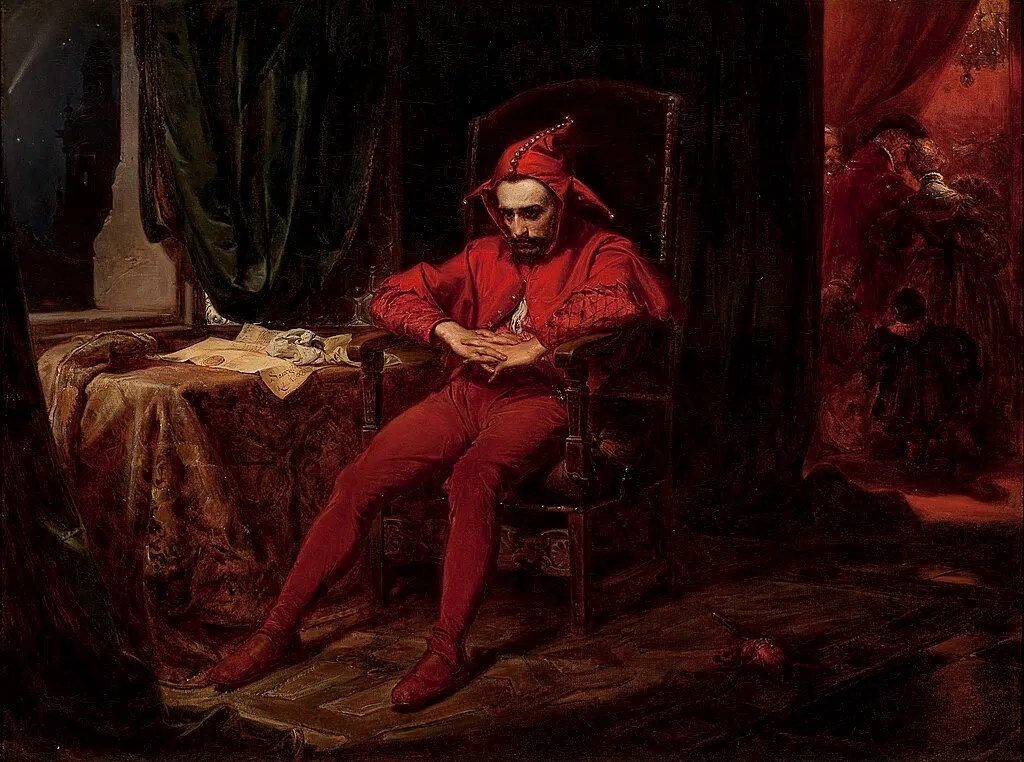
Stańczyk, by Jan Matejko

In his book 1Q84, Haruki Murakami writes that everyone, deep in their hearts, is waiting for the end of the world to come. Well, I don't know about everyone, but I certainly am waiting for it. Desire to not exist is not the desire to kill oneself, not even some version of "I will not initiate it myself, but if something that is quick and painless is to come, then I am happy about it." But the wish of never having been born in the first place. To go to sleep and not wake up, not “not wake up” as if you died in your sleep, but wishing that there was no night in which you went to sleep in order to wake up. Desire to simply get plucked out of existence. The only realistic solution for such violent desire is the end of the world. Though the former means not existing and all other people not noticing your absence. And the latter means eliminating all observers.

But both events make the desire come true, though the cost and method is obviously different. Now this mentality, that if I hadn’t been born, then I wouldn’t have suffered, isn't new. Some say it’s a sign of a victim mindset, of cowardice, of selfishness. And so is the wait for the end of the world. When we are wishing for these events, we are not taking everyone’s lives into account. This day, no matter how bad for us, is the best day of their life for millions of people. And thousands of them are going to speak, literally in their language, these words. ...continue reading...

Forrest Gump sitting on a bench
Filed under:

I guess most people hate it because it got the best of both worlds: won several Oscars and made a lot of money. And in the same year, The Shawshank Redemption and Pulp Fiction were also released.


By Satyam Ghimire | Date: 2024 September 29

Also available as a YouTube video.
Filed under:

Companies are okay with you just importing numpy as np, but you must write the code to implement LRU cache in notepad during interviews.

Date: 2025 June 28

Filed under:

Unfortunately, I tend to update CSS rather than writing anything new.

Date: 2026 April 11

Filed under:

You remember that. Doesn't matter if it's true or not. You see, a man should believe in those things, because those are the things worth believing in.

Date: 2024 April 4

Filed under:

It seems a duty of a great artist like Miyazaki to spread hope and optimism, even though he himself doesn’t subscribe to those beliefs.

By Satyam Ghimire || Date: 2024 September 17


Also available as a YouTube video.
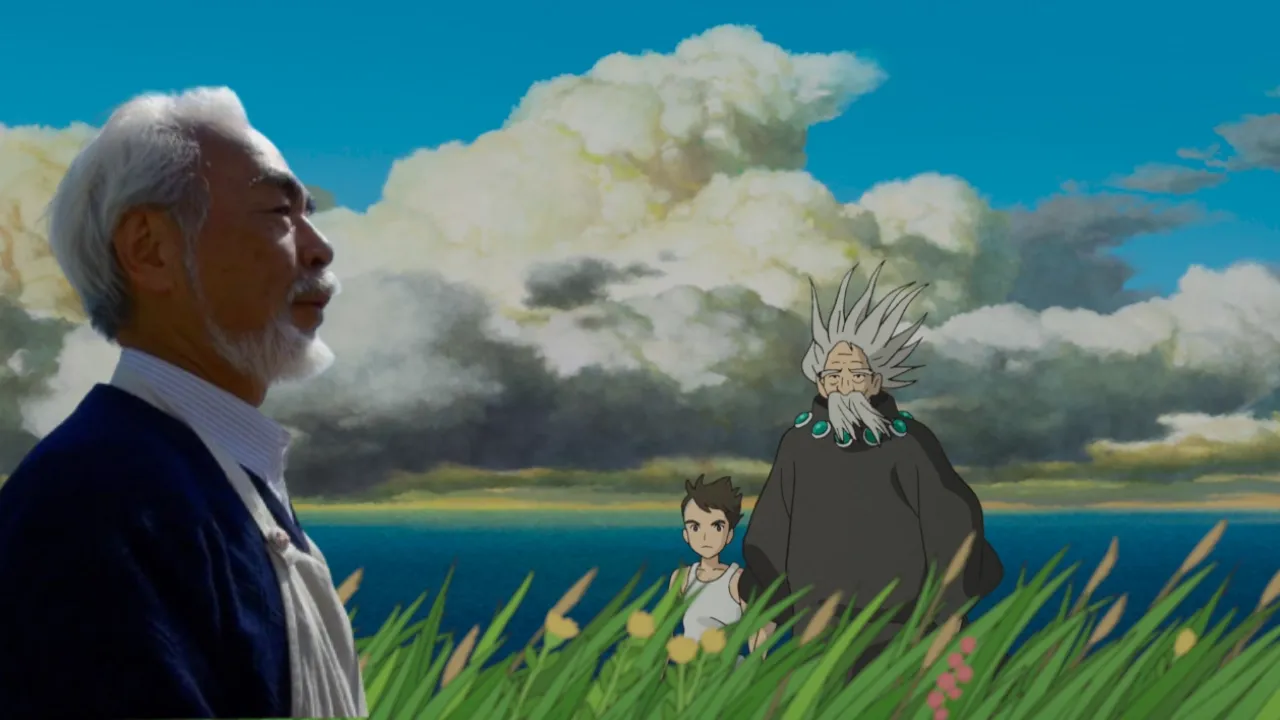
hayao miyazaki and his boy and the heron

When some great artists approach the end of their life, they entertain the idea of a successor, though they know deep down that no one can truly take their place. In his latest film, The Boy and The Heron, Hayao Miyazaki has told a story of one such creator. Though on the surface the film is about a young boy Mahito overcoming grief of his mother's death, and like other Miyazaki's films, follows a journey through a fantasy land filled with colorful characters. But of course, this perspective has not much to do with the question which almost was the title of the movie, “how do you live”? Mahito’s great-grand uncle created a world parallel to ours, a world with its own small set of creatures and magic. This old man is looking, waiting, for someone to take over his work. To wash it pure and bring once again the balance and harmony among the creatures upon whom he had sprinkled life. To continue his legacy, to build a better paradise. Of course Mahito rejects the old man’s offer.

He says he has malice and greed and he would corrupt everything. He would rather choose the real world, with all its shortcomings, and be an ordinary man. The old man, as if he already expected this answer, isn't sad or angry at getting a “No!", even though he had high hopes for Mahito. Of course Miyazaki looked out for potential candidates, to pass his torch hand to hand, but no one was good enough for him. Perhaps his judgment was right, perhaps it wasn’t and he was too hard on others. It doesn’t matter now. The end is almost here. He is 83 years old. He knows the studio is going to fall apart. ...continue reading...