I recently watched Guillermo Del Toro’s Frankenstein. Before that I had only known that this is an English classic in which a scientist creates a monster and this is some sort of a horror story. And Mary Shelly was just 20 when she published it.
Turns out the film is slightly different from the actual novel, a character misplaced here, a name changed there, plot slightly modified so it works well for a three structure film. But the overall theme of the novel is preserved and well presented. It’s about an inanimate object, this creature, coming to life and wanting to live, blend in with humans. Then I remember a similar thing happened towards the end of the Barbie movie two years ago. And when I thought about it, I realized they were very similar characters.
It got me thinking how we are a dramatic species. We love it when an inanimate object comes to life and praises life, defends it, while we ourselves are not a big fan. Why does this happen? Why do we want to see someone, or rather something desperately in love with life, while we ourselves are somewhat tired of it, when we are losing the ability to endure it and to see any grace in it?
When our will to live is slipping away, when our life is a mundane chore, a repetition of anguish, we are drawn to these stories and find it inspiring. We turn to these characters, we notice how different looking and fake they were, and yet in a snap they fell in love with life. How they could sacrifice everything, their perfect utopia, their perfect non-existence, for this brief chance at tasting what we taste everyday. How stupid of us to get tired of life then, how ignorant of us to forget its beauty?
Although our point of view is not broken, only when we change perspective, we find it easy to see. Take for example this: We know life is precious and we shouldn’t kill ourselves, and yet sometimes we see this feeling steaming inside of us, grasping us within its claws more and more each day, but when we imagine the day after we kill ourselves, as written beautifully in this poem by Meggie Royer, we truly see what’s at stake. We see how we would want to come back. We see how much it will affect our loved ones. What we will miss. And then we hesitate, we snap back, we realize just how cruel and selfish and stupid it was of us to think of all this nonsense. Whose life does not have pain? Who is happy in the world? There are people having far worse than you. Everyone has their share and they are still fighting, going on, still hopeful.
Okay, maybe I don't like this life, but what if I think of a toy, like barbie, that suddenly becomes alive and is introduced to life. Would she like life then? She probably would. She probably would see beauty here that eludes me, she probably would understand how rare it is to get to experience my circumstances.
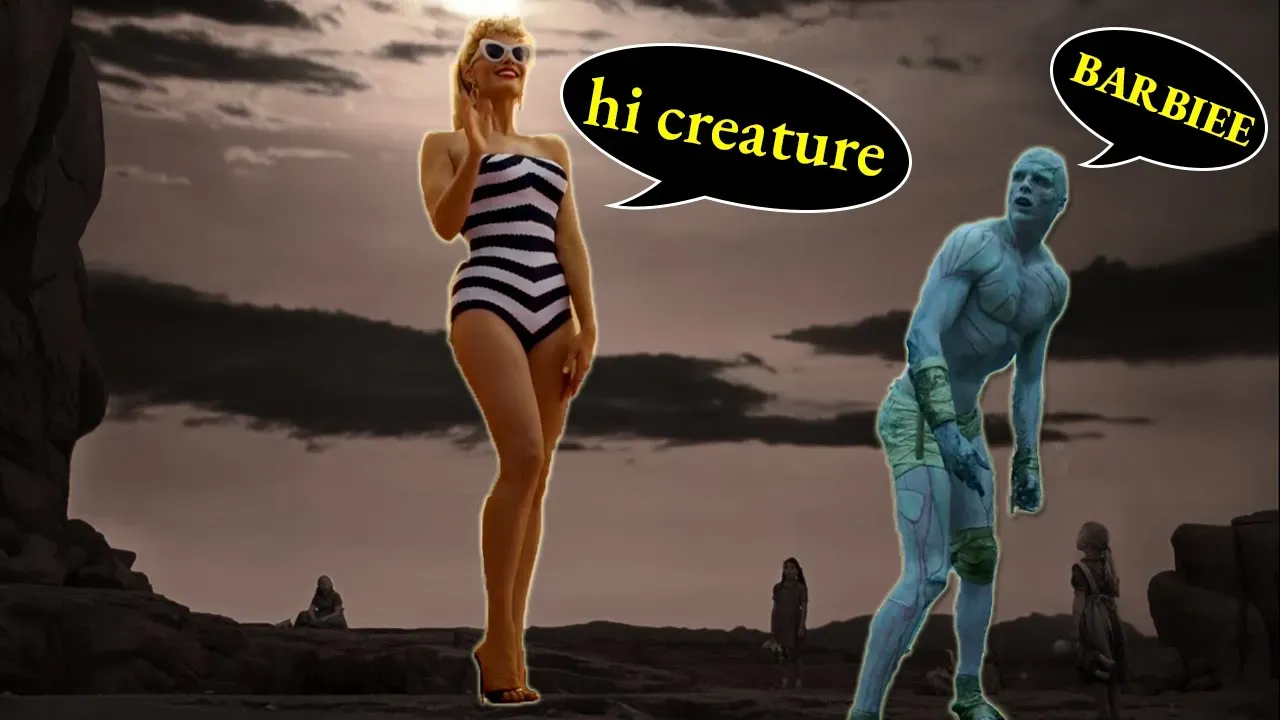
And so these stories aren’t really about the toys at all. The toys are as lifeless as they were before. They are just a medium, a fake creation, a mirror built by the author, by the director, and a mirror that the audience want to look in to see their true self. That’s why these stories resonate so much. It is ourselves we wanted to see in Frankenstein's monster. It is our lost hope we seek in the words of this creature. It is our struggle we want Barbie to praise and negotiate for. It is our own life we want to fall in love with.
And so we seek those stories or create one ourselves with whatever resources we have. We give voice to our own everyday objects, our toothbrush, our dolls, our pillows. We reanimate the characters we saw on movie so they can speak our words. In our heads we have conversations with book characters. We do our own world building, we stitch our own fan fictions. All to be comforted. All to build a friend who will pat us, listen to us, give us some perspective, and patiently teach us how to live.
So in a sense these characters cannot be interesting because they lack their own voice. I mean why would Barbie want to mix in with humans, why would this creature want to be accepted by human society? Why do they not have their true wishes, wishes that are not aligned with the emotion of most audiences?
But there is a genre of film that solves this problem. Some films do have toys with their own wants and needs, not a mimicry of this silly phrase, “ohh how I love human life.”